

- Gintaré Turskyté
- Editor
- Send me an e-mail
There’s a saying we like to use around here: training doesn’t start when a dog first steps into a harness — it starts the day they’re born. Every single one of our sled dogs goes through the same journey, a slow, careful process of growing up that shapes not just their bodies, but their whole personality. Here’s what that journey actually looks like, from a blind, deaf newborn to a confident dog running with the team.
Quick timeline: puppy to sled dog
- 0–14 days: Blind and deaf, fully dependent on mother
- 3–8 weeks: Eyes open, first human contact, socialization begins
- 8 weeks: First vaccinations; mother may step back, a "nanny" dog often steps in
- 4–5 months: First collars, then first harness experience
- 6–8 months: Sled training begins, paired with an experienced adult dog
- 8–10 months: Moves into the dog yard full-time
- 1–1.5 years: Runs "half days" with the adult team, personality and potential start to show
- 2 years: Fully grown, fully trained, ready for race training
The First Two Weeks: Total Dependence
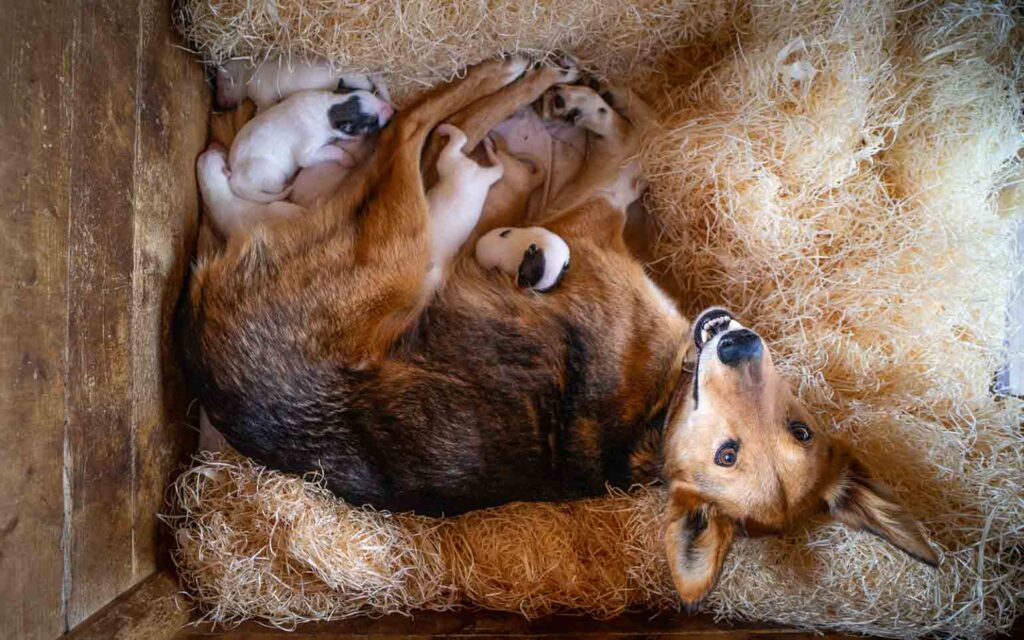
For the first ten days of life, a husky puppy is completely helpless. They’re blind and deaf, relying purely on their sense of taste and touch, and they depend entirely on their mother for everything. Around day ten to fourteen, their eyes finally open and their senses of smell and hearing start to kick in. This is also the point where we can start gently lifting them and introducing them to people for the first time.
That early human contact matters more than people realize. It’s the very first building block of the social, easygoing temperament we want every one of our dogs to have.
Three to Eight Weeks: Learning That People Are Good News
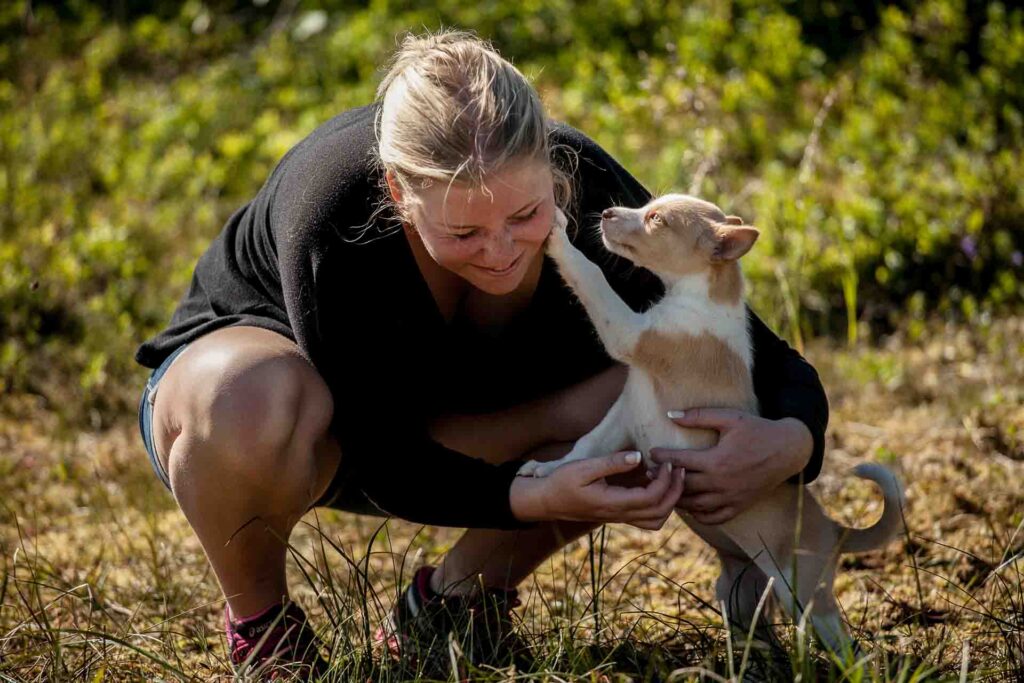
By three weeks of age, the real socialization begins. From here on, it’s all about building positive associations with people. First it’s our staff and the caretakers looking after the mothers and litters, then, as the weeks go by, it’s our guests too. This is one of the most important parts of the whole process. A sled dog in our kennel will meet thousands of people throughout its life, so we want it to genuinely enjoy human company, not just tolerate it. Those early weeks of cuddles and calm handling are a big reason our dogs are so famously friendly later in life, something many guests notice when they visit our Husky Café.
By four weeks, the puppies start climbing out of their whelping house on their own (using the little stairs we build for them) and begin eating solid food. At around seven weeks, they learn their first manners, like sitting calmly and waiting before being fed instead of launching themselves at the cage door. They also head out on their first short walks, discovering grass, sticks, and everything else a puppy finds endlessly fascinating.
At eight weeks, the puppies receive their first vaccinations. As they grow bigger and more energetic, the mother eventually lets us know she’s ready for a break. When that happens, we introduce a carefully chosen “nanny” dog from the kennel. These patient adults help teach the puppies good social skills while giving mum some well-deserved peace and quiet.
We rotate nanny dogs every few weeks so the puppies get to know different adult dogs, and when they eventually move into the dog yard, they’re often placed close to one of their former nannies. Having a familiar face nearby makes the transition much easier for everyone.
Puppy Training: Building the Human Bond
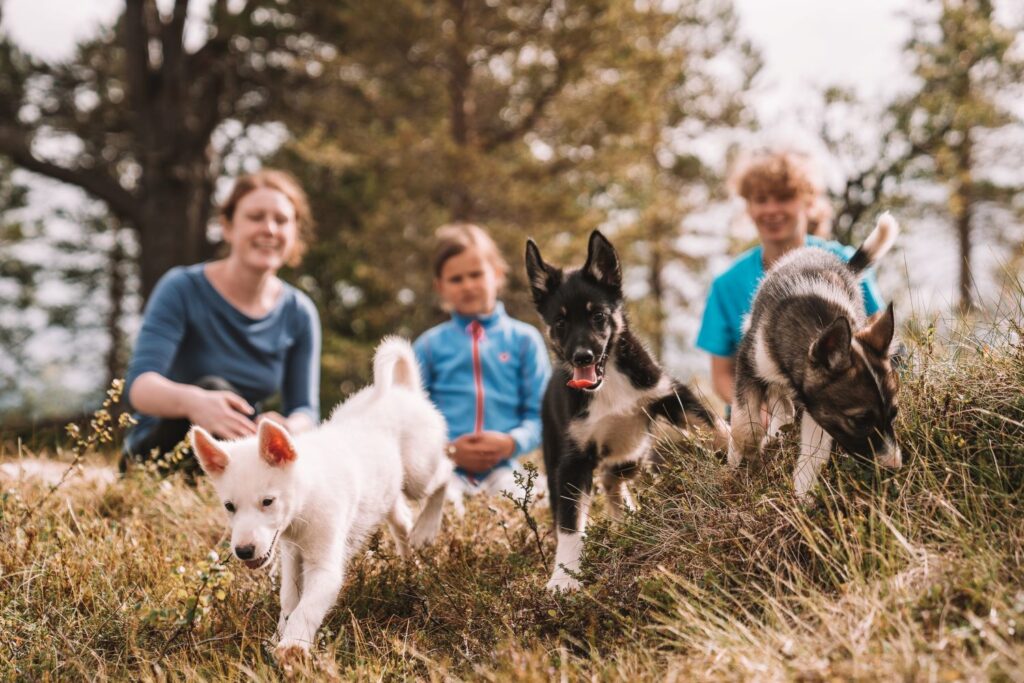
This is also the stage where our Puppy Training program comes in — guests spending time with the litters, playing with them, walking them, just generally being part of their world. For the puppies, it’s another layer of positive human connection. For us, it’s a chance to watch personalities emerge. And for our guests, it’s usually the highlight of their trip. Everybody wins, but especially the puppies — they don’t even have names yet at this stage; we just call them “puppy, puppy, puppy” — but they’re already learning to listen, to follow, and to enjoy being around people.
Four to Six Months: Collars, Harnesses, and First Steps Toward Work
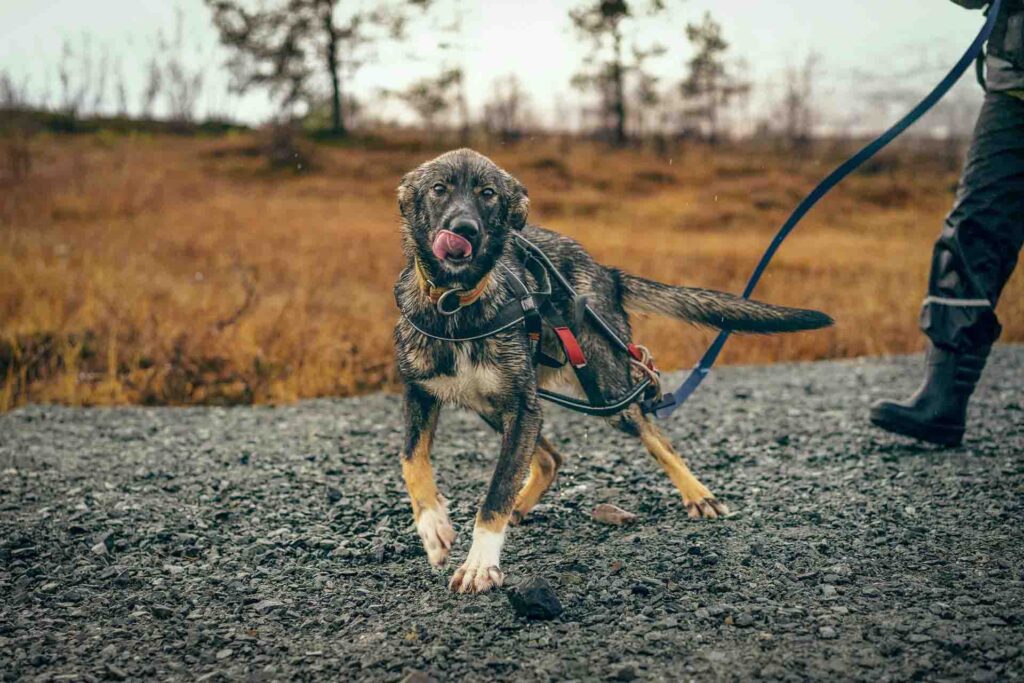
Around four months, puppies get their first collars. It’s a bigger milestone than it sounds — at first, they don’t love it, and we have to watch closely so they don’t chew through them. We introduce collars gradually, starting with just feeding times, before slowly extending how long they’re worn.
At five months, harnesses enter the picture, and this is a completely different sensation for a puppy compared to a simple collar. We start by just letting them wear the harness and run around freely, so they build a good association with it before ever feeling any pull. Only later do we attach a leash to the harness clip, which is the puppy’s first real experience of what it means to pull against resistance. This groundwork pays off hugely later, because by the time they start actual sled training, wearing a harness and feeling that gentle pull already feels familiar rather than strange.
Around five and a half months, female puppies who are approaching their first heat need to be separated from the males, simply to prevent any unplanned breeding.
Six to Eight Months: The First Real Sled Training
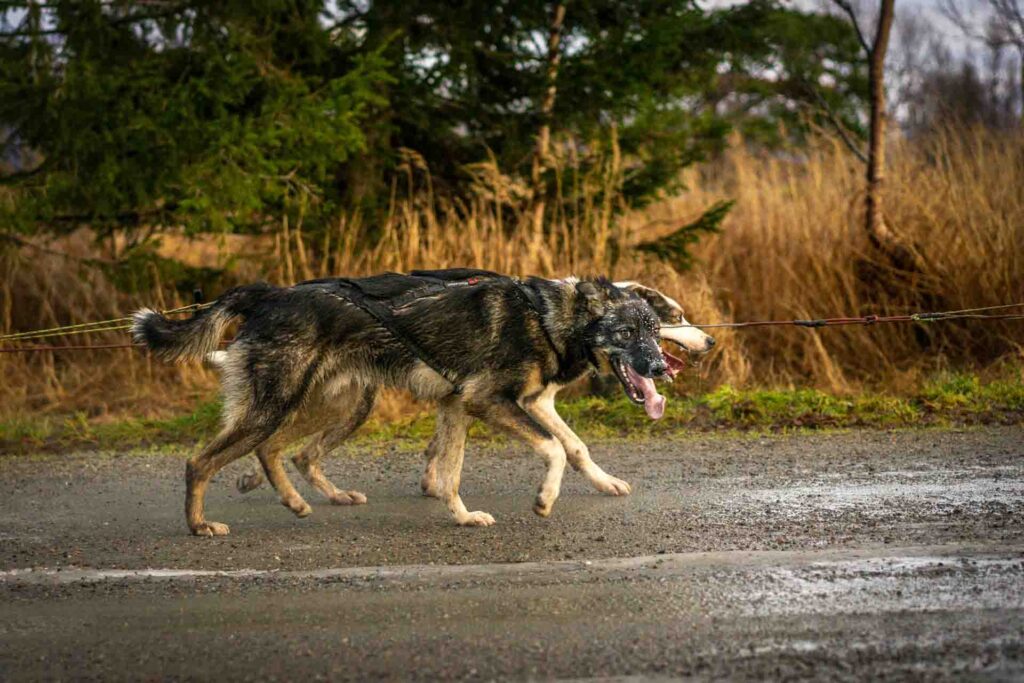
This is where it all starts coming together. Between six and eight months old, puppies begin actual sled training — and thanks to all the earlier groundwork with collars, harnesses, and leashes, they’re remarkably calm about it. They already understand the sensations of being clipped in; the only new part is learning to work as part of a team rather than individually.
We pair each puppy with an experienced, patient adult dog — or, for the more strong-willed puppies, a dog with enough character to help them settle down and focus. Training starts small: just five or ten minutes at a time, in an empty or very light sled, gradually building up. Once a young dog can comfortably run for around thirty minutes, we start including them in small training teams with our regular dogs a few times a week. It’s genuinely exciting for them — suddenly they’re running alongside the “cool” adult dogs, and it’s clear they already know exactly what to do.
Around eight to ten months, puppies typically make the move to the dog yard full-time. It’s a big life change — they go from living together in one shared space to living on individual chains — but because they’ve already been fed on the chain and are used to the collar, the transition is smooth and positive rather than stressful. We make an extra effort here too, making sure every young dog gets plenty of cuddles and attention from staff and guests, so the dog yard quickly becomes a place they associate with happiness.
The Teenage Years: One to Two Years Old
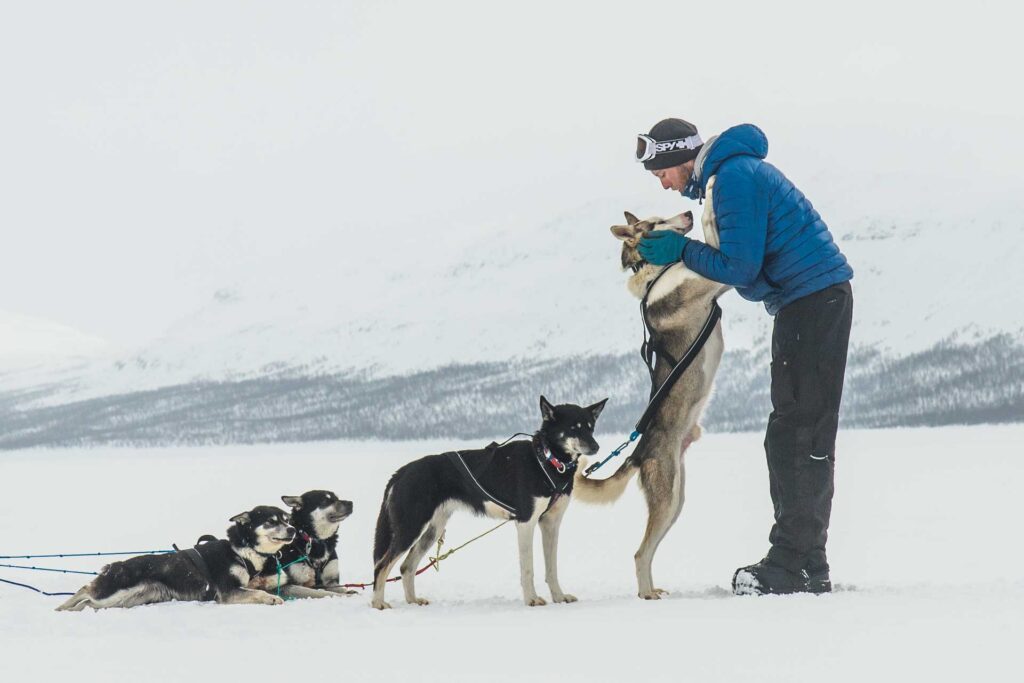
Here’s something that might surprise guests: even though a six-month-old husky doesn’t look much like a puppy anymore, we consider our dogs “puppies” right up until they turn two.
By around a year to a year and a half, young dogs are living the full dog yard routine and running with the adult team — but at a reduced load. They typically run “half days,” covering maybe twenty to thirty kilometers, a few days a week, rather than a full adult workload. We’re also careful about positioning: we avoid putting young dogs in the wheel position (closest to the sled), since that spot carries the most physical strain, and their bodies — especially their lower backs — aren’t fully developed yet.
This is also when their individual characters really start to show. We start to notice who’s a little more focused, who’s obsessed with running, who keeps pushing to the front of the pack. Every so often we’ll test a promising young dog in the lead position alongside a steady older dog, just to see how they handle it. Most of the time, though, they’re still a bit too “teenage-minded” and unfocused to take on real responsibility — and that’s completely normal.
Two Years Old: Fully Grown, Fully Ready
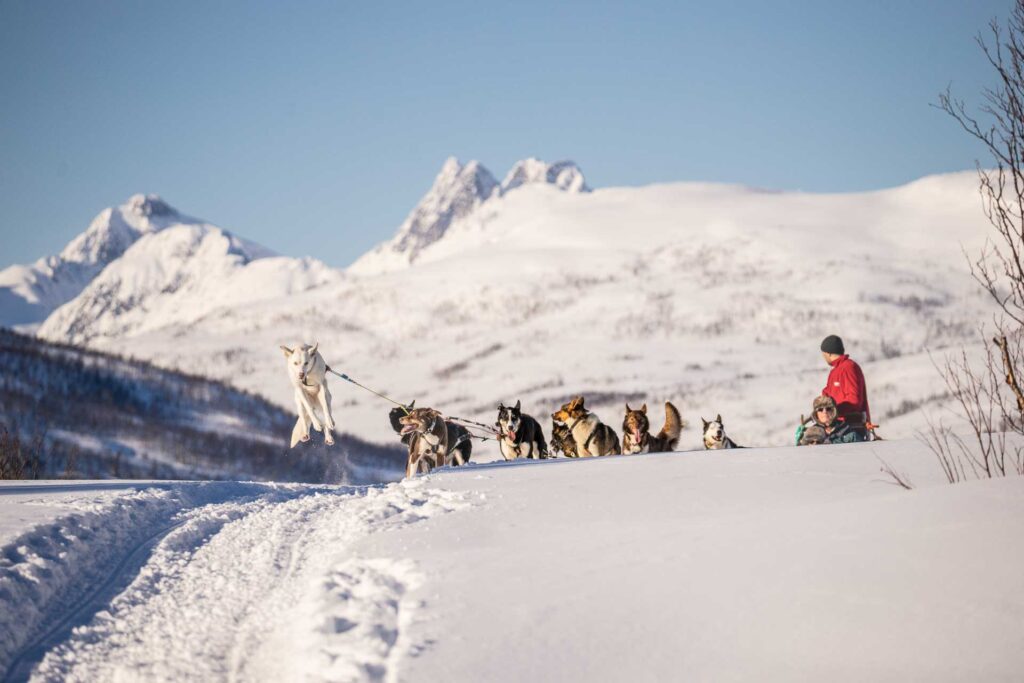
By the time a dog turns two, their body is fully developed, and we consider their training complete. This is the point where they’re ready to become full working sled dogs — and, for the ones who show that special spark, ready to begin race training.
It’s a journey that spans two full years, built one small step at a time: a gentle lift as a newborn, a first walk through the grass, a first harness, a first short sled run. Every stage builds on the one before it, which is exactly why our dogs grow up to be not just capable athletes, but genuinely happy, social, well-adjusted members of the team. It’s a long process — but when you see a two-year-old dog confidently running lead for the first time, you realize every single step was worth it.

4 Responses
Such a nice article! we visited you some years ago and got the chance to play with the little ones – one of the best memories of our holiday🥰 Nice to know about the process that turns them into sled dogs. Thank you for sharing all this insight 😊
Thank you for your comment! It takes a village to raise a child they say, similar for the puppies 😅 nice to hear that you had a good time visiting us 🥰
Great article thank you for writing and sharing. So good to know that you consider the youngsters as pups 🐶 until 2 years old.
Loved the training story.
We had the most wonderful day with you back in February – it was the absolute highlight of our holiday
Thank you for the comment! I don’t think all the youngsters would agree with our “policy” though. They have so much energy! 😅 But the teenage years are the time to build muscle and endurance, and there’s no rush to push them too hard. Dog sledding should always be fun, both for the dogs and the people involved 😊